


Know before you go: Sugaring season in Vermont
- Kaitlyn S

- Jan 7
- 2 min read

Between the months of February and April things get a little sweeter in New England, particularly in Vermont. The maple trees are tapped. The sap, which is mostly water, is processed through many hot steps to produce what consumers know as maple syrup. During this time, consumers have the opportunity to peak behind the curtain into this time honored tradition passed through the generations.

3,000+ sugarhouses in Vermont
Not all sugarhouses are open to the public, but if they are, then sugaring season is the best and most likely time to be able to visit.

Sugaring process phase Maple tree farms are a family affair. Land and techniques are passed from one generation to the next. One family is welcoming its eighth generation.

The family legacy is tracked on the walls Maple syrup is standardized so it is the same but different from sugarhouse to sugarhouse including infused flavors.
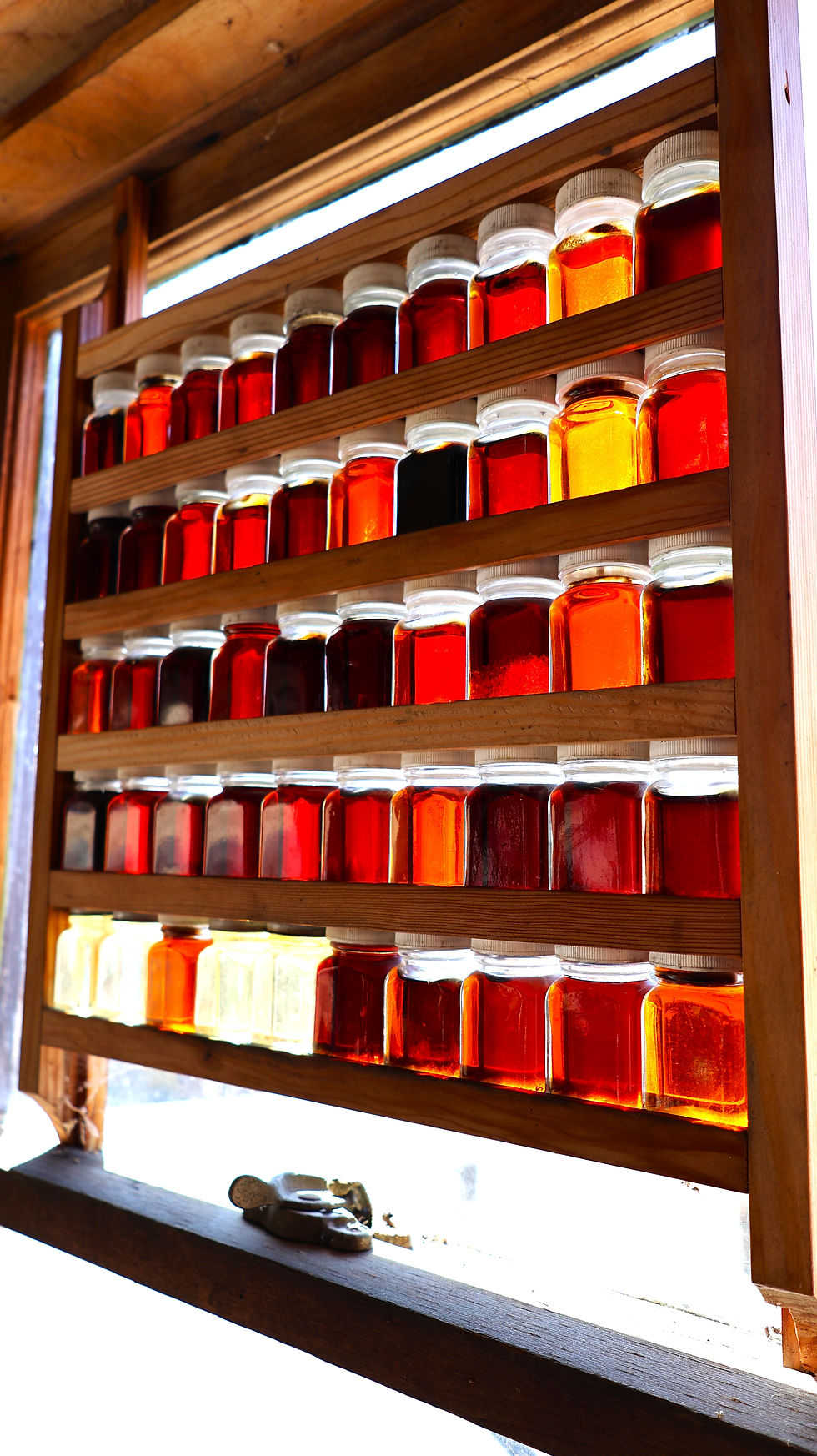
Syrup standard grades Beware of mud. Winter snow is melting, but ground is still mostly frozen. Maple sugar farms are farms at the end of the day so there is likely dirt roads or at least a dirt parkin lot along the way. The dirt is a sandy consistency that sticks less to shoes and tires.
Use caution when using GPS to determine between paved roads and dirt roads. Dirt roads can slow down travel and be dangerous if drivers are unfamiliar with the terrain.
Prepare for variety of weather. Spring in Vermont is cooler and could include sun, snow, rain and wind all in one day. Bring layers and check the weather before you go.

With snow on the ground, steam rises in the sugarhouses Lots of sap, work and heat is needed to make a little bit of maple syrup. Estimated 40 gallons of sap is processed into 1 gallon of maple syrup.
The maple sugar industry keeps many traditions, but is not immune to changes in technology and operations to improve efficiency and quality and consistency. Recent adaptations include reverse osmosis and tubing to collect sap instead of the traditional buckets hanging from trees. This does compromise some of the esthetic of the beautiful landscape as tubing lines many roads.

Plastic taps and tubing are innovative changes across the industry You don't have to go far to experience it. With so many sugarhouses in this small state, there are lots of options within a few minutes from each other.

Inside the heat of the sugarhouse


Comments